
Vessel records · Identity checks
Is it the same ship after a name change? Start with the IMO number
A cargo ship appears in an old port notice under one name and in a recent tracking record under another. The photographs look similar. Has the ship been renamed, or have two vessels been mixed together?
Compare the ship’s IMO number before comparing names. For a vessel assigned one, this identifier remains attached to the ship through changes of name, flag or ownership. A matching number is a strong anchor for a record comparison. It does not make every surrounding claim true: the source may contain an error, and the number alone says nothing about a particular voyage, cargo or owner on a particular date.
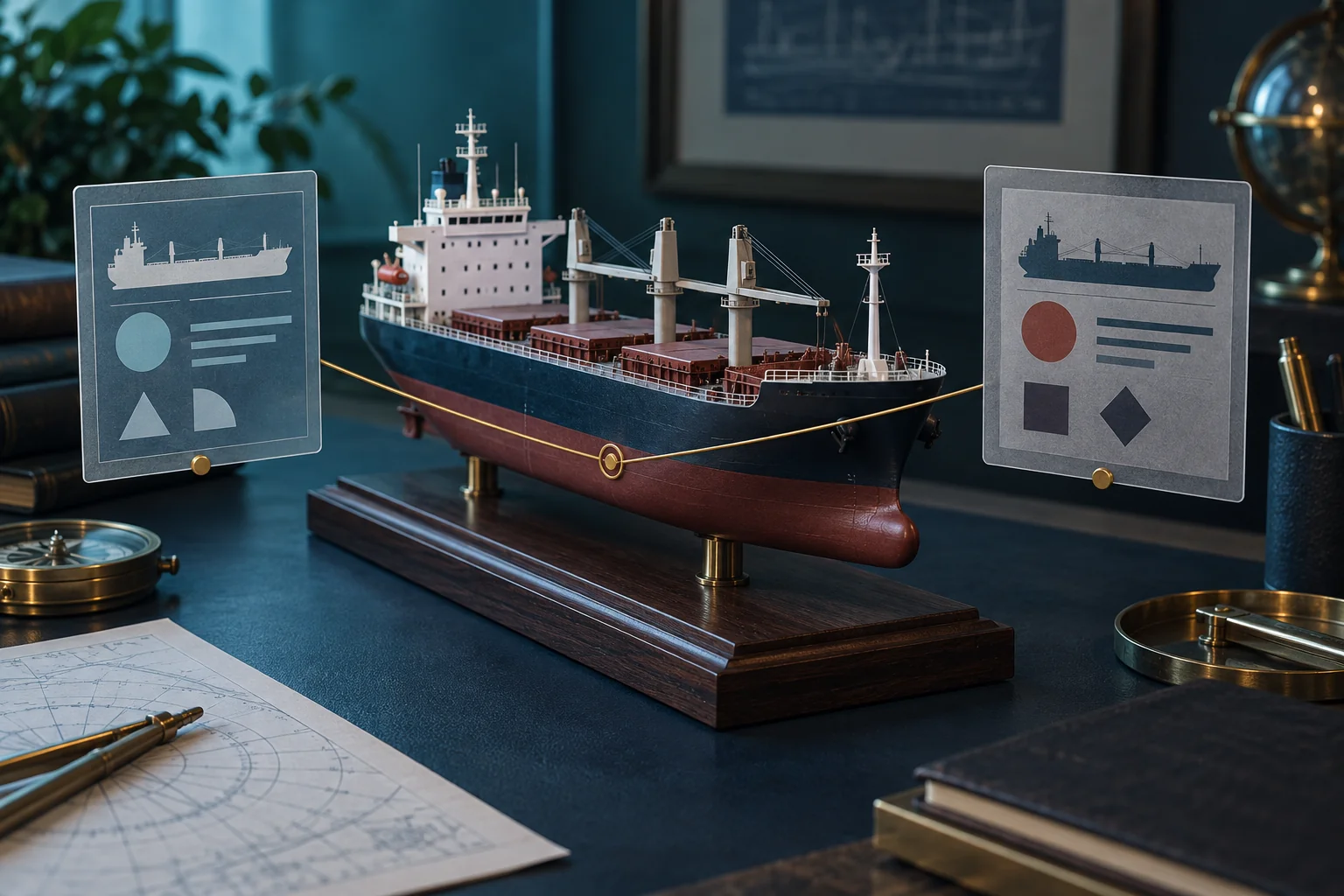
Three fields that should not be treated as synonyms
A ship name is a useful search term, but it is a poor database key. Names can change and unrelated vessels can share one. Spelling and transliteration add more variation. Keep the original spelling from each source, then place any standardized spelling in a separate column.
| Field | What to do with it | What it cannot settle alone |
|---|---|---|
| Ship IMO number | Use it to join records concerning a vessel assigned that identifier. | Whether a copied record is accurate or a voyage allegation is true. |
| MMSI | Compare the maritime radio identity and the date of the record. It is a nine-digit identifier used in systems including AIS. | Whether different radio identities necessarily mean different hulls. |
| Vessel name | Search current and former names; retain the spelling and date. | Whether two same-name results describe the same ship. |
Read the label beside an IMO identifier carefully. A company or registered-owner identifier is not the ship identifier. Copying the right-looking number from the wrong field can create a convincing but false match.
A rename test with three fictional records
The records below are invented for this exercise. IMO-A, IMO-B and MMSI-B are placeholders, not valid registration numbers. They describe no real ship or company.
| Record date | Recorded name | Ship identifier | Supporting details |
|---|---|---|---|
| 12 March 2026 | Moorlight | IMO-A | Built 2008; length 142 m |
| 18 September 2026 | Tern Reach | IMO-A | Built 2008; length 142 m; radio identity MMSI-B |
| 19 September 2026 | Tern Reach | IMO-B | Built 2016; length 96 m |
The first two records are candidates for the same vessel. Their shared ship identifier matters more than their different names. The third record should remain separate: its matching name does not outweigh a different IMO identifier and conflicting construction details.
Now add source quality. If the first two rows came from independent, dated registry records with a documented name history, the rename conclusion has substantial support. If both came from websites repeating one tracking feed, you have a lead to check, not two independent confirmations. A precise field can still have an imprecise origin.
Build a small timeline before writing the conclusion
- Copy the identifier as displayed. Record the field label, source URL, page title and retrieval time. Do not repair a missing digit or substitute a similar result. Note whether the source is a registry, port document, operator statement or tracking service.
- Look for the same ship identifier in an authoritative record. The IMO’s current identification circular points to GISIS for number lookups. Availability and access requirements vary by source; if a record is unavailable to you, mark it unverified. A search snippet is not the full record.
- Separate the event date from the date you read it. A page opened today may describe last year’s vessel name. Store “record effective date” and “retrieved at” independently. If no effective date is stated, leave it unknown.
- Compare physical details and former names. Build year, dimensions and vessel type can expose a copied identifier or a mistaken search result. Small differences need interpretation: sources may use different measurements or dates. A mismatch is a question to resolve, not permission to pick the convenient value.
- Keep contradictions visible. Save both rows and the disputed fields. Seek a dated correction or additional authoritative record. Do not merge records merely because one name, photo or flag matches.
A workable note has these columns: source; source type; ship IMO; recorded name; effective date; retrieval time; supporting fields; contradiction; conclusion. That is usually more useful than a folder of screenshots with no dates.
Why an AIS result can complicate the picture
AIS displays combine different kinds of messages. The US Coast Guard distinguishes position information from static information such as a vessel’s name. A receiver may have received one kind without yet receiving the other. A missing name therefore does not, on its own, demonstrate concealment. Static fields can also be entered incorrectly or left outdated.
If the MMSI changes while a well-supported ship IMO stays the same, investigate the radio record’s date and provenance. Do not automatically split the vessel into two identities. Conversely, if a tracker shows a familiar name with an unexpected IMO number, do not silently replace the number. Preserve the conflict and compare a more authoritative source.
The useful question is “Which record describes which vessel, at what time?” A map marker alone cannot answer every part of that question.
Keep vessel identity separate from ownership and conduct
Establishing that two records refer to the same ship does not establish who controlled it throughout the timeline. Registered owner, operator and other commercial roles must be attributed to their own sources and dates. Start a separate entity check when the question moves from the vessel to a business; our company OSINT guide explains how to organize that research.
Likewise, a valid identifier is not a certificate of present operational status. The IMO’s 2026 circular explicitly separates number allocation from status established by relevant certificates. Keep conclusions narrow: identity continuity is one finding; location, cargo and conduct are different findings requiring different evidence.
A conclusion someone else can check
“The two dated records list the same ship IMO identifier and consistent construction details. They support continuity of vessel identity across the recorded name change. We have not independently verified the voyage or ownership claim.”
If you only have a tracker and an old screenshot, say that instead. The result becomes useful when the reader can distinguish the matching fields from the remaining gap.
For a simple rename question, the public records may be enough. If your next task is to assemble a sourced timeline across a vessel and associated businesses, describe that specific scope through OSINT Jet’s manual investigation service. Ask for sources, dates and unresolved conflicts in the deliverable. This workflow does not imply that OSINT Jet provides a live AIS feed or guarantees a match.
Primary sources
- IMO Circular Letter 5096, 27 February 2026: current scheme implementation, identifier continuity, allocation and status.
- US Coast Guard: Maritime Mobile Service Identity: what an MMSI identifies.
- US Coast Guard: AIS frequently asked questions: static information, reception and data discrepancies.
Published 16 October 2026 · OSINT Jet