
OSINT Jet · Researcher operational security
Phone Number OPSEC for OSINT Researchers
Your personal number can reveal a contact identity, receive account-recovery codes and become a route back into your life. Keep it outside the case. Most phone-number OSINT should remain passive; when contact is genuinely required and authorized, use a documented organization-managed channel.
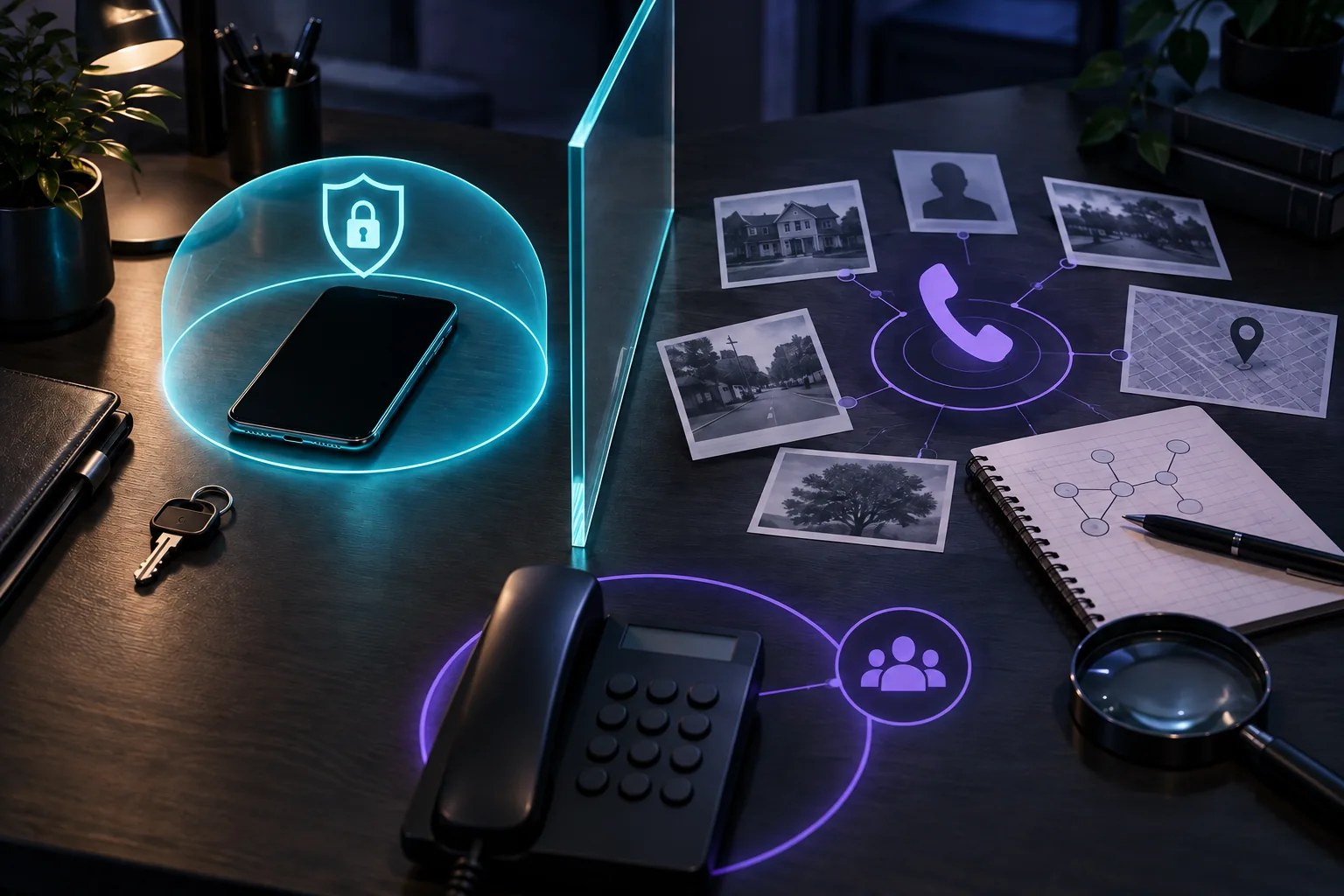
One number can play three risky roles
Your phone number can be both a research tool and an identity bridge; treat those roles as separate assets. In one account it may be a public profile field, in another a password-recovery factor, and in a call it may identify you to the recipient. Reusing the same number across those roles lets a single disclosure connect otherwise separate parts of your life.
Before opening a case, draw three boxes: the subject clue you are allowed to examine, the investigator identity that must remain private, and the authorized contact channel owned by your organization or client. Do not move a number between boxes because it is convenient.
| Role | Default treatment | Do not assume |
|---|---|---|
| Number supplied as a case clue | Normalize, preserve and check public context passively | That the current user is the person named in an old result |
| Personal number of the researcher | Keep out of searches, notes shared externally and direct contact | That hiding caller ID prevents correlation |
| Organization-managed contact line | Use only under an approved contact plan, with records | That possession of the line authorizes impersonation |
| Account-recovery number | Minimize public exposure and protect the carrier account | That SMS alone is the strongest recovery method |
Research first without calling, messaging or saving the clue
A phone clue usually does not need contact. Normalize the country code, record how the number entered the case, and review lawful public references. Do not add the number to a personal address book: contact-sync features can upload it, suggest profiles or expose your own account to other people. Do not test a messaging app if opening the profile, sending a notification or changing a “last seen” state would interact with the subject.
The phone number OSINT guide explains how to build a dated history and keep a name result at the correct confidence level. Caller ID, an old directory and a recycled number can point in different directions. Passive research lets you compare those clues before deciding whether contact is necessary at all.
Caller ID is a display signal, not identity proof. The FCC’s unwanted-calls guidance treats spoofed caller ID as part of the illegal-call problem. For OPSEC, the practical lesson is simple: do not trust an incoming name, and do not believe that changing or withholding your outgoing display makes the call untraceable or policy-compliant.
If contact is necessary, make it a separate approved task
Contact changes the case. It can alert a subject, create a safety issue, affect evidence and expose the investigator. Get the purpose, authority, channel, script, recordkeeping and stop condition approved before a call or message. High-impact, adversarial or law-enforcement matters need the relevant legal and organizational process, not an improvised personal call.
Use a line managed by the organization for that purpose. The displayed name, voicemail, retention settings and access should match policy. State who you are truthfully; do not impersonate a bank, platform, journalist, regulator or another person. Ask only what the decision requires. Never request a password, one-time code or unnecessary identity document.
If an independent confirmation is the goal, use a number published by the organization you are verifying rather than the number supplied in the suspicious message. Record the official source of the contact route, the person or department reached, time, exact question and bounded answer.
Protect the number that can reset your accounts
The FTC’s SIM-swap guidance recommends limiting public exposure of personal details, setting a PIN or password on the mobile account and considering an authentication app or security key for sensitive accounts. It explains that a successful SIM swap can redirect calls and text messages, including verification codes.
NIST’s current authenticator guidance treats public telephone-network out-of-band authentication as restricted and tells verifiers to consider SIM changes, device swaps and number porting. That does not mean every SMS account is compromised. It means a phone number should not be your only recovery plan when a stronger option is available.
- Use a carrier-account PIN and review port-out protections offered by the provider.
- Prefer phishing-resistant authentication for important accounts when supported, and keep backup methods current.
- Remove a personal number from public bios, resumes and case artifacts unless publication is genuinely necessary.
- Do not buy an anonymous or “burner” service on the assumption that it guarantees privacy; providers retain different records and may conflict with policy or law.
Fictional case: a vendor callback that never needs a personal phone
This example is invented. A nonprofit receives a payment-change request from a vendor. The message lists a new mobile number and asks for an urgent callback. An analyst finds that the number appears in an old public marketplace listing under a different name. The analyst considers calling from a personal phone to hear who answers.
Instead, the team keeps the work passive and separates the questions. The marketplace result is dated and may reflect reassignment, so it is not attached to a current person. The analyst finds the vendor’s official website independently, uses the finance number already held in the procurement system and asks whether the banking change is authorized. The vendor says it is not and begins its own incident process.
The useful result is the trusted-channel confirmation, supported by preserved context. The analyst’s personal number never enters the case, the suspicious number is not provoked, and an old directory result is not mistaken for present identity. If the approved finance line had confirmed the change, the older listing would remain a limited historical clue.
If your personal number enters the case, reduce harm before investigating more
Document how and when exposure occurred, tell the responsible team, block or report harassment through the provider and review the mobile account, recovery settings and public profiles. Preserve threatening messages without replying. A number change may be appropriate in some cases, but first map the accounts and people that depend on it so the change does not lock you out or break evidence retention.
OSINT Jet can organize a supplied phone clue with other public evidence, confidence notes and contradictions, which can reduce the urge to make an unplanned contact. It does not place calls, reveal real-time location or guarantee the identity of a subscriber. Follow Responsible OSINT, record the work in the investigation report template, and review current report options only when several public clues need structured analysis.
Published by OSINT Jet · Original publication: 29 September 2026